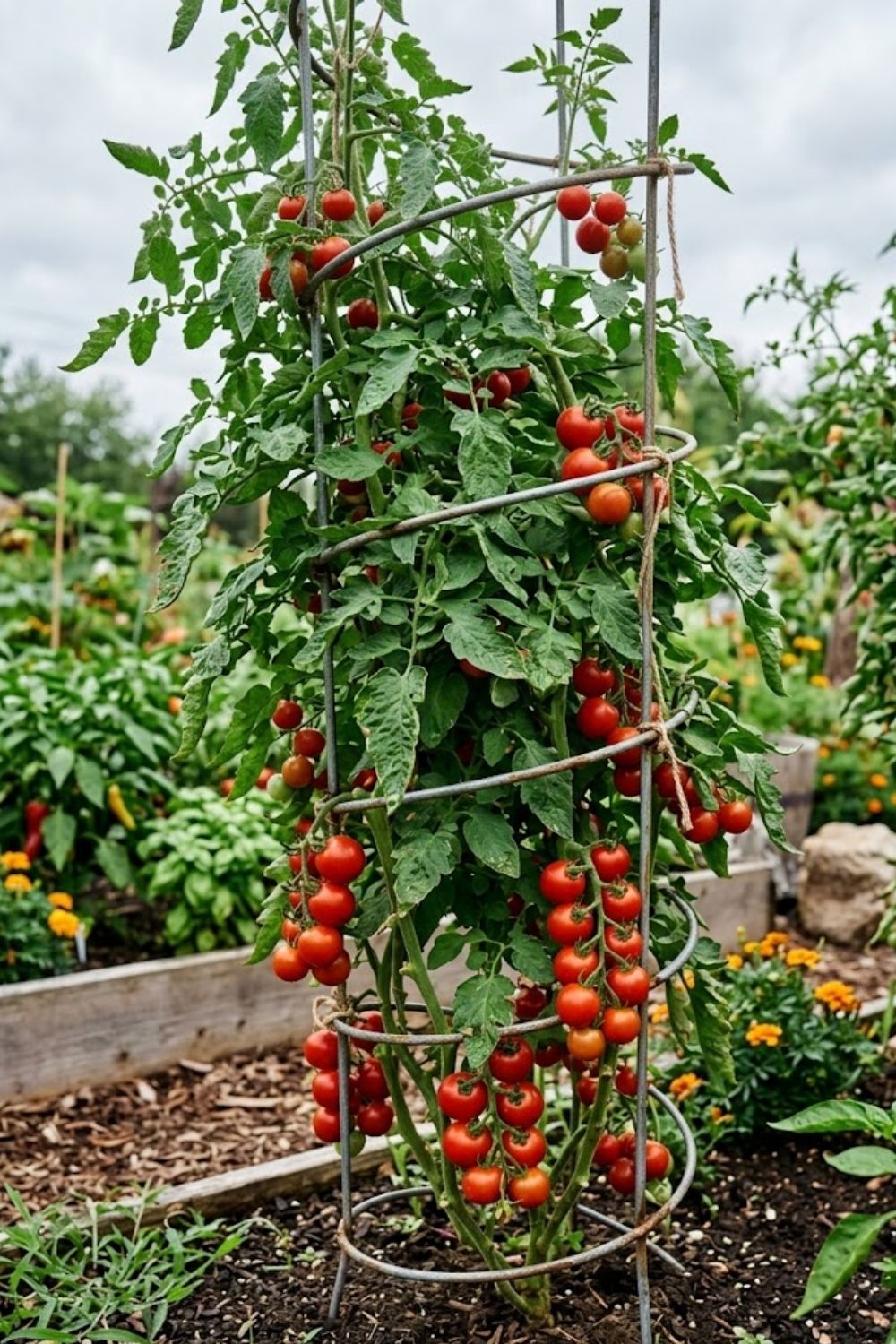
If you’re a beginner gardener looking to grow tomatoes vertically, you’ve come to the right place. Tomato vine trellising is one of the most effective techniques for maximizing harvests in limited spaces while keeping plants healthy and productive. In my years of cultivating tomatoes in various garden settings, I’ve discovered that proper support systems make the difference between struggling plants and abundant harvests.
Vertical growing not only saves precious ground space but also improves air circulation, reduces disease pressure, and makes harvesting much easier on your back. The twelve trellis ideas I’ve selected represent solutions that I’ve personally tested or observed working reliably for novice gardeners. Each option balances affordability, ease of installation, and effectiveness for supporting heavy tomato vines laden with fruit.
Whether you have a small balcony, a modest backyard, or a sprawling homestead, these trellis ideas will help you grow healthier tomatoes with better fruit quality. From simple DIY solutions using repurposed materials to more structured permanent installations, there’s an option for every skill level and budget. Let’s explore these practical trellis systems that will transform your tomato growing experience!
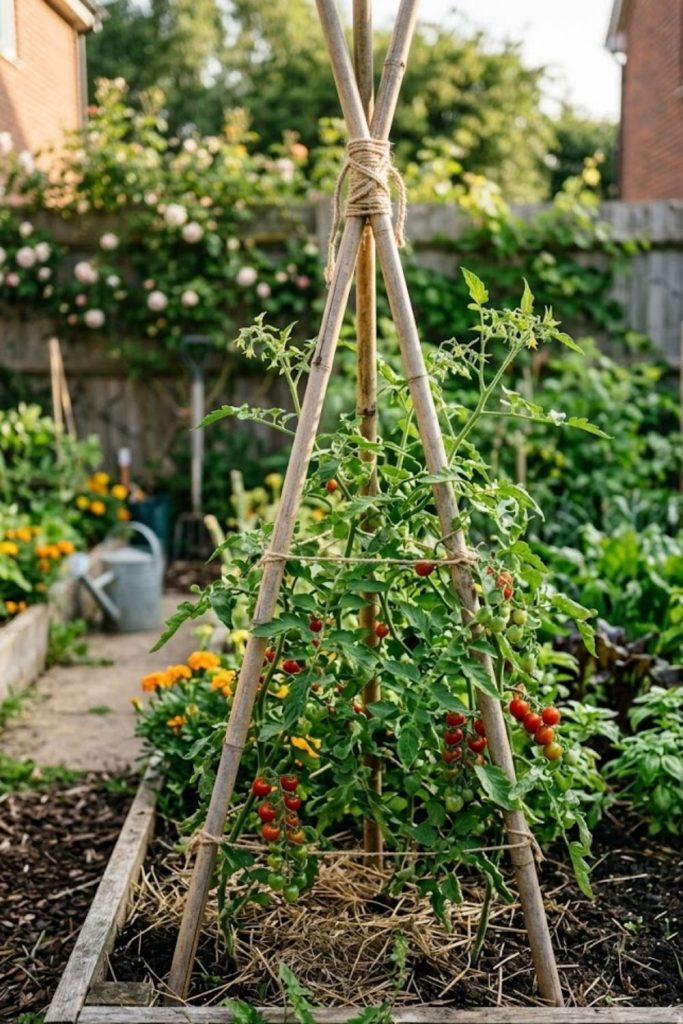
#1 Simple Bamboo Teepee
Source: Gardenerspath
Create a classic teepee structure using three to four bamboo poles tied together at the top with strong twine or zip ties. This traditional support method works beautifully for indeterminate tomato varieties that grow tall and need continuous staking. The teepee shape provides stability against wind while allowing plants to climb naturally upward. I recommend placing poles at least 6 feet tall to accommodate vigorous growth throughout the season.
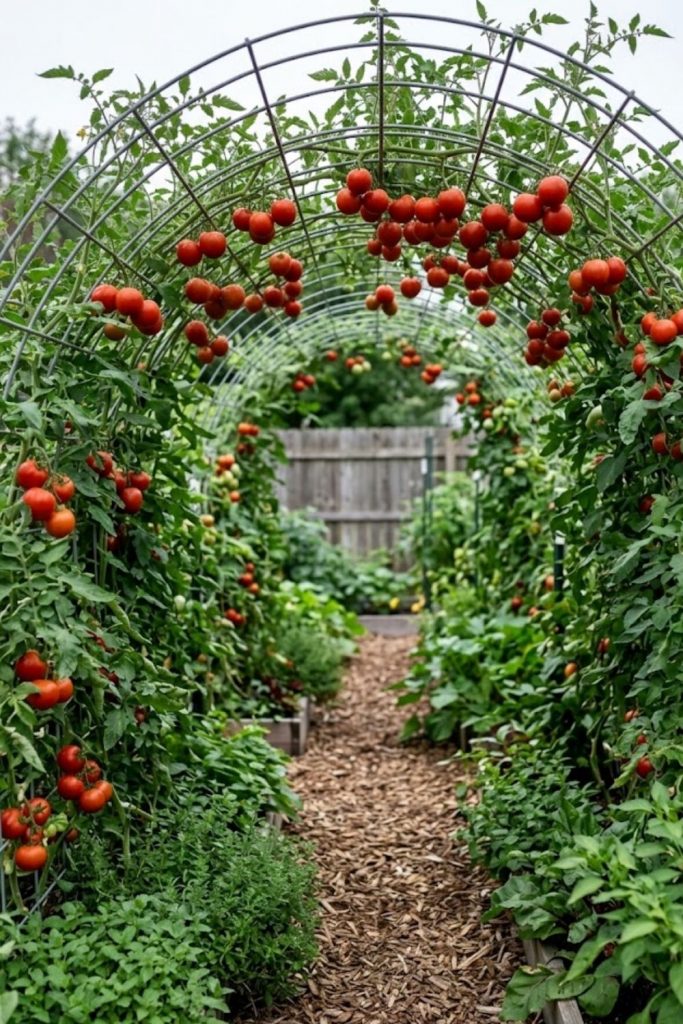
#2 Cattle Panel Arch
Source: Homesteadandchill
Repurpose a sturdy cattle panel by bending it into an arch and securing the ends firmly in the ground with t-posts. This creates a beautiful tunnel effect that supports multiple tomato plants on both sides while creating shade underneath for other crops. The heavy-gauge wire withstands substantial weight even when plants are loaded with fruit. In my vegetable garden, this has become the most reliable permanent trellis structure.
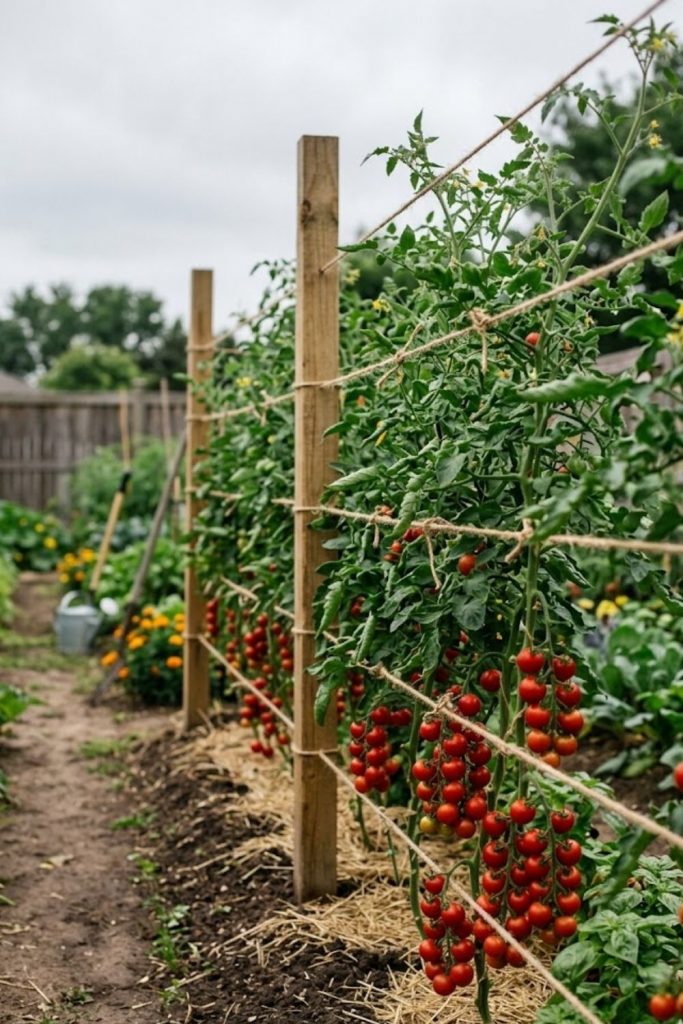
#3 String Trellis System
Source: Motherearthnews
Install sturdy posts at each end of your tomato row and run heavy-duty twine or jute string horizontally between them at multiple levels. As plants grow, weave stems through the strings or use additional vertical strings for plants to climb. This method is incredibly cost-effective and allows for easy adjustment throughout the season. I find that biodegradable jute works perfectly for sustainable garden ideas.
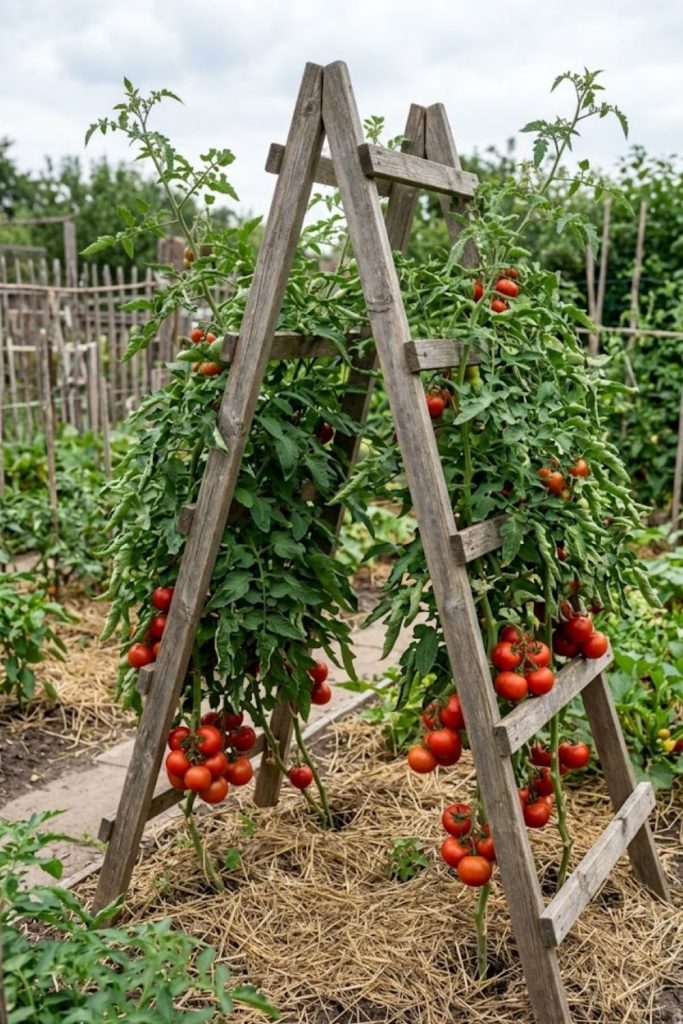
#4 Wooden A-Frame Ladder
Source: Empressofdirt
Construct a simple A-frame using two wooden ladders or scrap lumber joined at the top with hinges or sturdy brackets. This freestanding structure supports plants on both angled sides while allowing air to flow through the center. The wide base provides excellent stability without requiring deep ground penetration. I recommend painting the wood to extend its lifespan through multiple growing seasons.
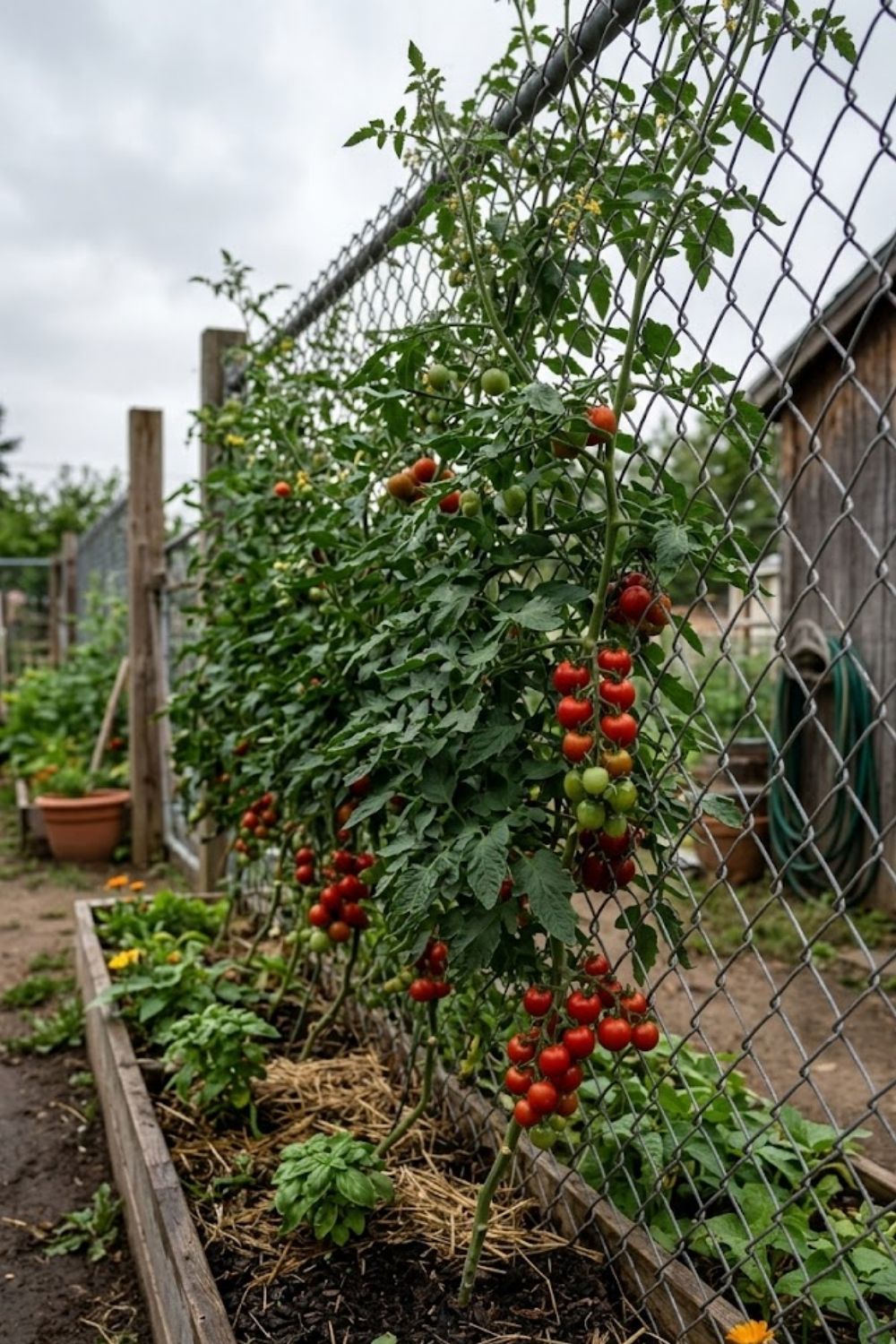
#5 Chain Link Fence Section
Source: Hgtv
Source discarded chain link fence sections from renovation projects or home improvement stores for instant heavy-duty trellising. Secure the panel vertically using sturdy posts and allow tomato vines to weave naturally through the diamond pattern. The rigid metal construction requires no maintenance and lasts indefinitely. This is my go-to recommendation for gardeners wanting a permanent garden solution.
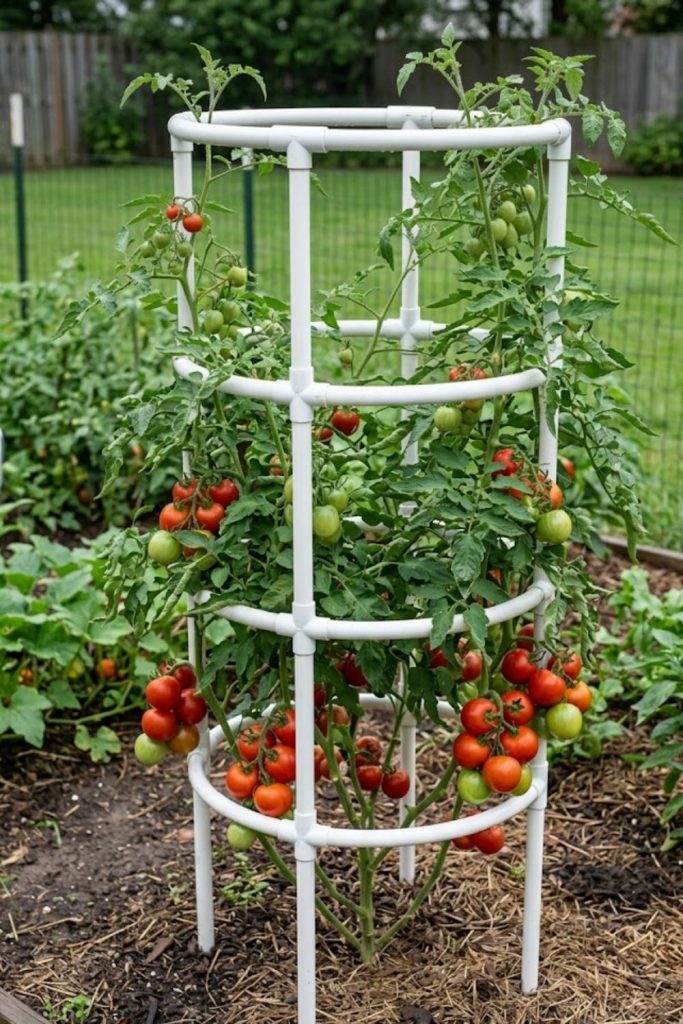
#6 PVC Pipe Tower
Source: Instructables
Build a lightweight tower using PVC pipes and connectors, creating a cage-like structure that surrounds individual tomato plants. The smooth surface prevents stem damage while providing multiple support points for tying vines. This portable system works well for container gardening and can be stored flat during off-seasons. I particularly like this option for determinate varieties that need contained support.
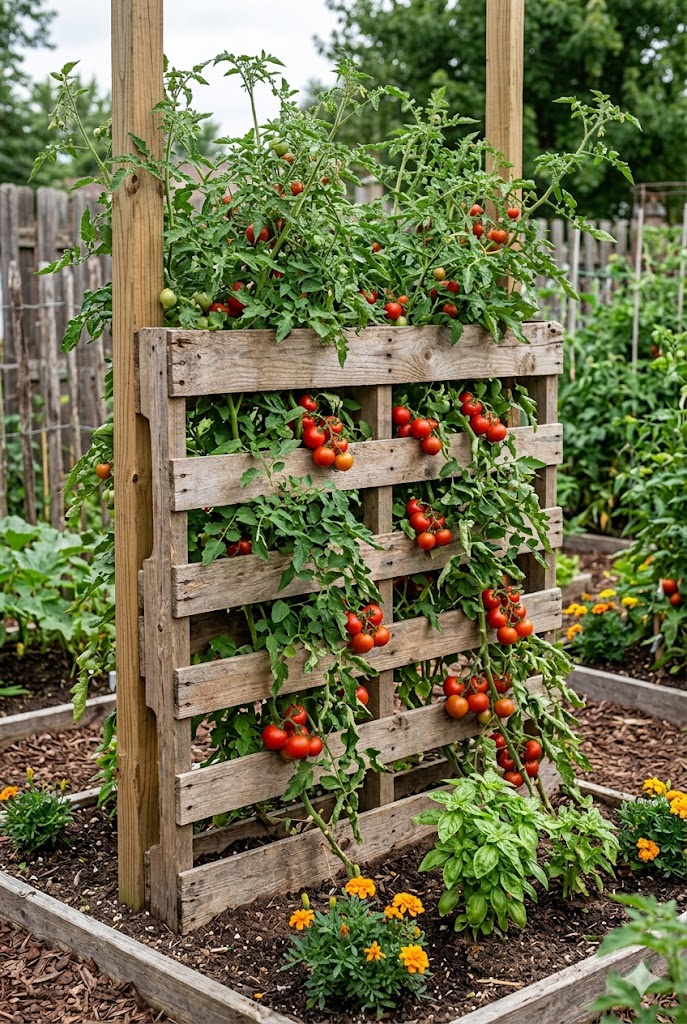
#7 Repurposed Pallet Trellis
Source: Diyways
Stand a heat-treated wooden pallet vertically and secure it to sturdy posts for an instant grid-style trellis. The regular slat spacing provides natural support points for tomato stems and allows for easy tying with twine. Be certain to use heat-treated rather than chemically-treated pallets for food safety. This upcycled approach aligns perfectly with budget-friendly garden ideas.
#8 Florida Weave Method
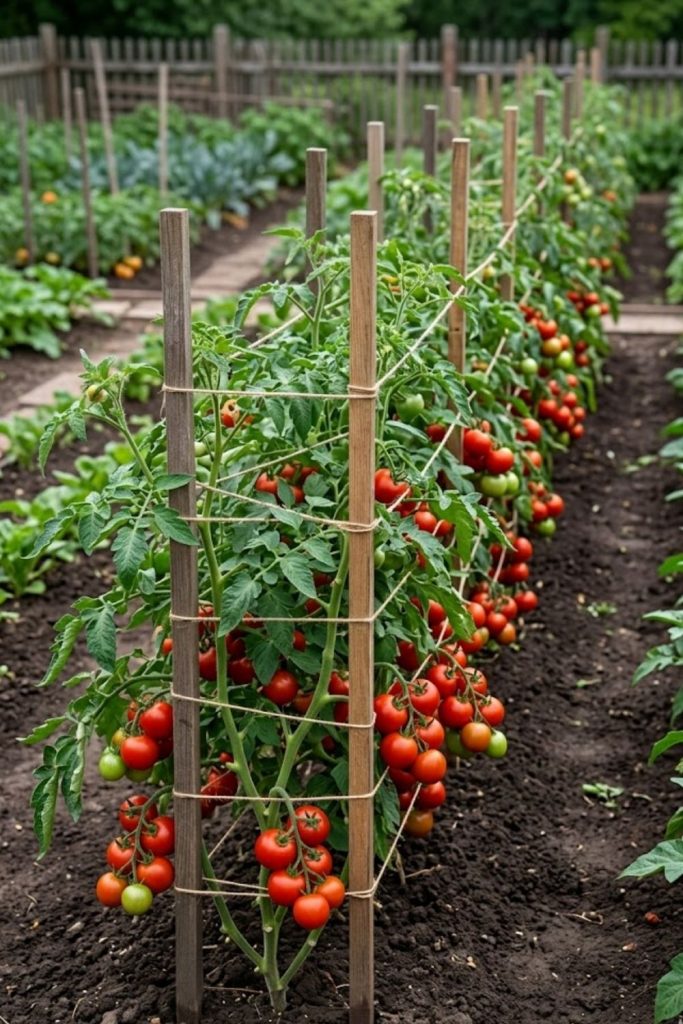
Source: Almanac
Drive stakes between every two tomato plants and weave heavy twine in a figure-eight pattern around stems and stakes as plants grow. This commercial growing technique keeps plants upright and contained without individual tying. The weave creates natural support that adjusts as stems thicken throughout the season. I find this method incredibly efficient for row plantings in my market garden operation.
#9 Spiral Tomato Cage
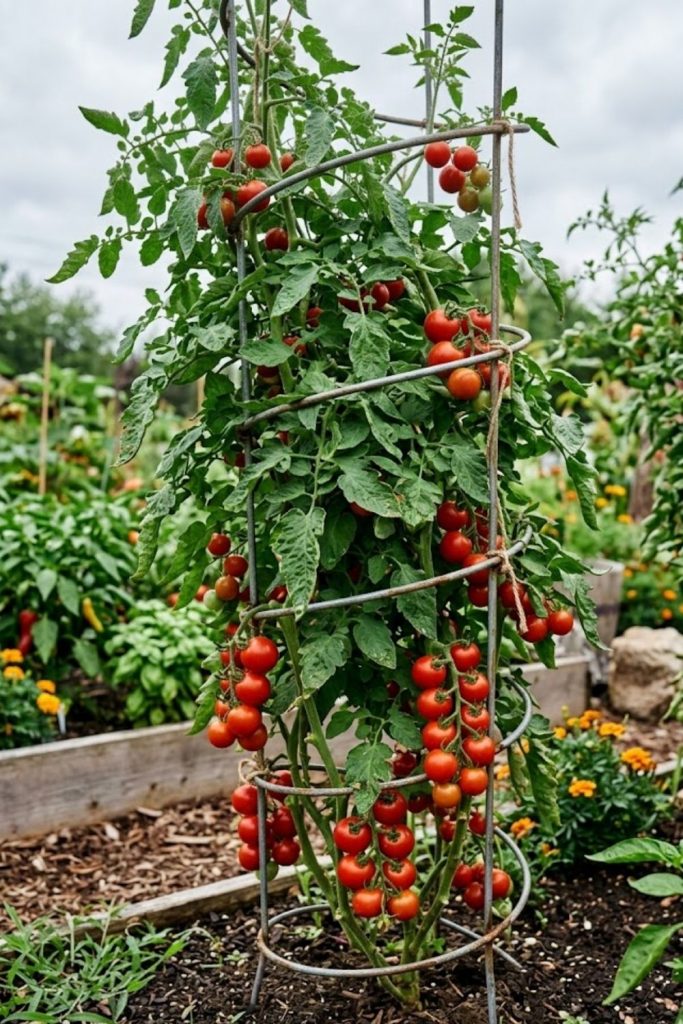
Source: Amazon
Purchase or create spiral metal supports that allow tomato vines to wrap naturally upward as they grow. The continuous spiral provides support at every height level without requiring tying or training. Heavy-duty versions withstand substantial weight better than standard cone-shaped cages. I recommend securing spirals with ground stakes for extra stability in windy conditions.
#10 T-Post and Hog Panel
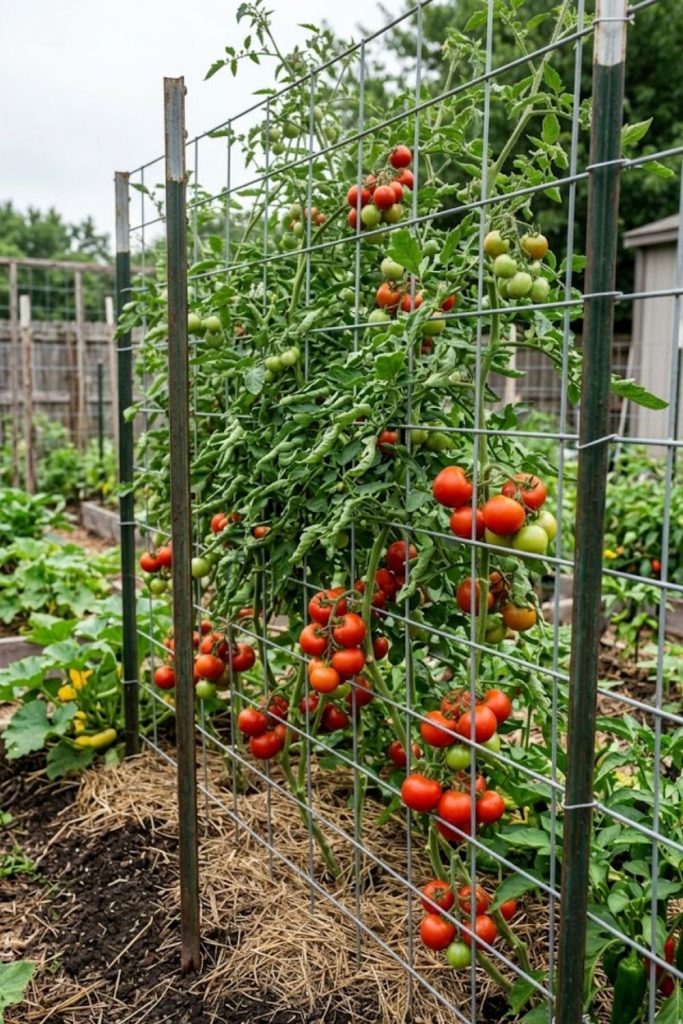
Source: Farmfitliving
Install sturdy T-posts every four feet and attach heavy hog panel or livestock fencing horizontally for a solid wall of support. This professional-grade system handles the heaviest indeterminate varieties and strongest winds without failing. The rigid structure allows for easy pruning and harvesting access from both sides. In my experience, this investment pays dividends for serious tomato growers.
#11 Obelisk or Pyramid Trellis
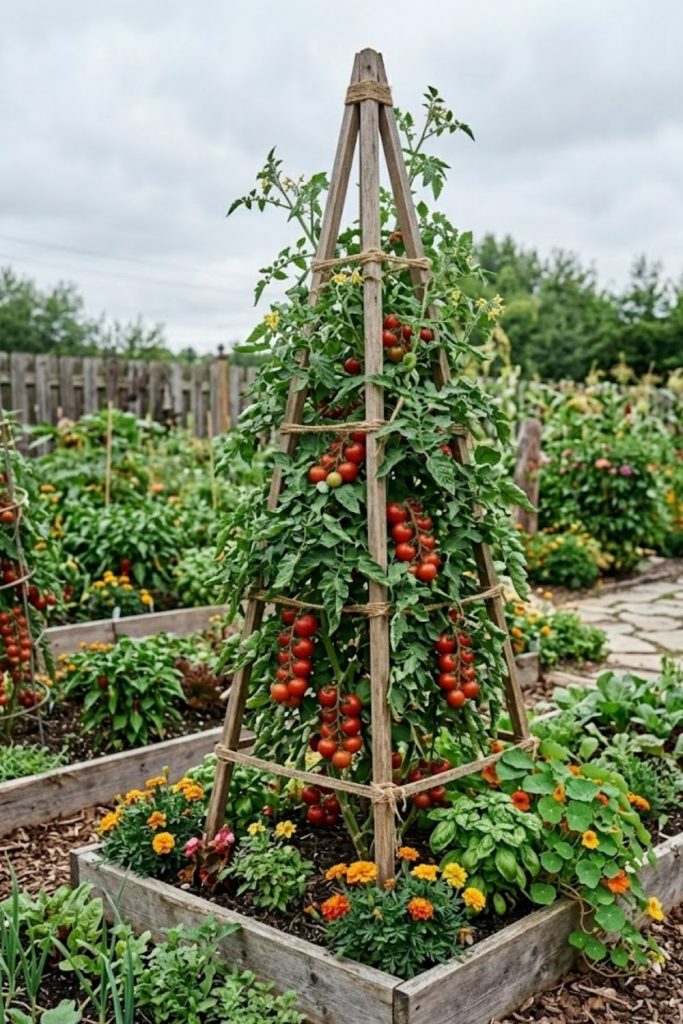
Source: Gardenersworld
Create an attractive four-sided pyramid using wooden stakes or metal rods converging at a central point. This elegant structure supports one plant per side while creating a striking focal point in ornamental vegetable gardens. The vertical design maximizes production in minimal footprint. I often use these in formal garden designs where aesthetics matter as much as function.
#12 Adjustable Tomato Ladder
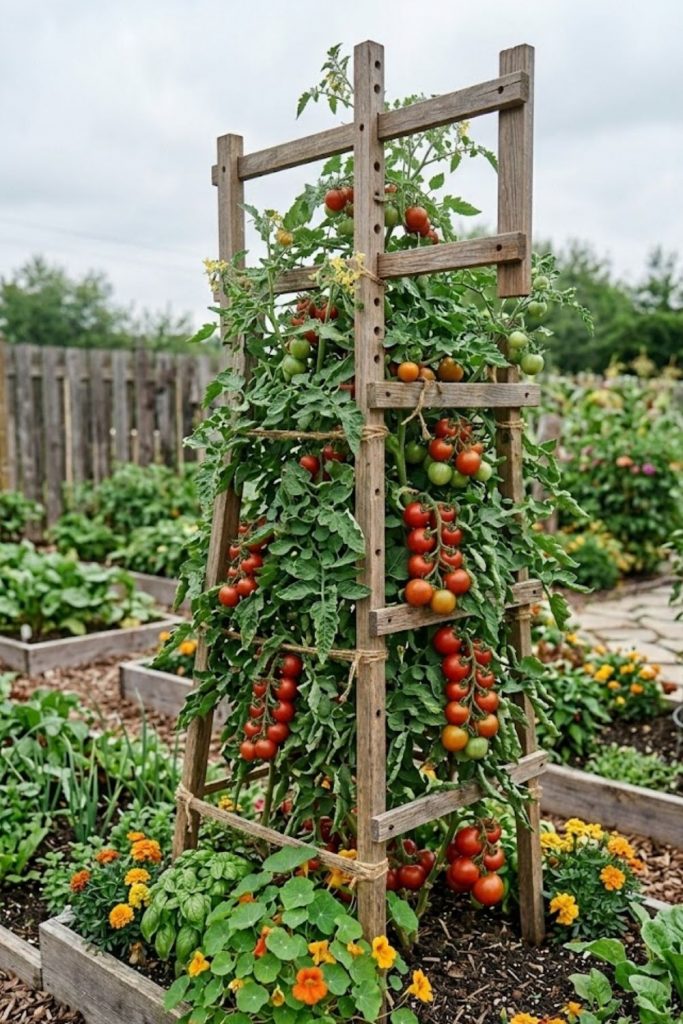
Source: Gardengatemagazine
Build a simple ladder structure with removable rungs that can be added as plants grow taller throughout the season. This adaptable system accommodates both determinate and indeterminate varieties with equal success. The open design allows for easy pruning, harvesting, and pest inspection. I appreciate how this DIY approach can be customized to any height needed for specific tomato varieties.