There exists in the world of horticulture no flower that has inspired such devotion, such artistic representation, such cultural significance as the rose. Throughout my two decades of gardening across multiple continents and climates, I’ve watched countless plant trends emerge and fade, yet the rose maintains its sovereign position in the hearts of growers and the aesthetics of designed landscapes. What distinguishes the rose from other ornamental plants is not merely its visual beauty—though the perfection of petal arrangement, the depth of color saturation, and the architectural elegance of well-formed blooms are undeniable—but the multi-sensory experience it provides. The fragrance of a true rose, that complex blend of sweetness and spice, fruit and flower, has been the subject of perfumery for millennia and remains chemically irreplaceable by synthetic alternatives. When we speak of climbing roses specifically, we enter a category that amplifies these inherent qualities through vertical expression, transforming utilitarian structures into living art and creating garden rooms defined by floral walls that change with the seasons.
The versatility of roses in garden design is, in my experience, unmatched by any other genus. I’ve grown them as formal standards shaped into lollipop trees, as sprawling shrubs defining garden boundaries, as cascading subjects tumbling from containers, and most dramatically, as climbing specimens scaling walls and pergolas. Each growth form offers distinct aesthetic possibilities and maintenance requirements, but the climbing habit holds special appeal for the gardener seeking maximum impact from limited ground space. By directing growth upward, climbing roses exploit vertical real estate that would otherwise remain horticulturally vacant, creating displays that draw the eye skyward and establish presence in the landscape that shrub forms cannot achieve. The practical applications are equally compelling: a bare fence becomes a privacy screen draped in blossom; an unattractive wall transforms into a tapestry of color and fragrance; a simple pergola evolves into a shaded retreat perfumed by flowers overhead. The ten varieties I’ve selected for detailed examination represent the culmination of my personal trials, selections that have proven reliable, beautiful, and capable of delivering the transformative potential that makes climbing roses worth the investment of space, effort, and anticipation they demand.
The decision to incorporate climbing roses into your landscape commits you to a relationship measured in years rather than seasons. Unlike annual vines that establish and decline within months, climbing roses are woody perennials that build structure over time, achieving their full potential only after several seasons of growth and careful training. This extended timeline requires patience but rewards the gardener with increasing abundance; a well-established climbing rose in its fifth year produces quantities of bloom that would overwhelm a first-year planting. The training process itself—selecting canes, securing them to supports, pruning to encourage lateral flowering stems—develops skills that transfer across many aspects of garden management and creates an intimate knowledge of your plants that shallow-rooted annuals cannot provide. I’ve found that the roses I grow on structures become landmarks in my garden’s mental map, reference points that orient my understanding of the space and markers of seasonal progression as they move from bare winter canes through first leaf, bud swell, explosive flowering, and the final hips of autumn. The varieties detailed below have earned their place in my recommendations through proven performance across diverse conditions, though I emphasize that success with climbing roses, more than many other plants, depends on matching cultivar to climate, aspect, and available maintenance commitment.
When I advise gardeners on establishing climbing roses, I invariably emphasize the importance of structural support as the foundation upon which all subsequent success depends. Unlike climbing vines that attach through tendrils or adhesive pads, roses climb through a combination of arching growth habit and the strategic use of thorns for grip—mechanisms that require human intervention to direct effectively against vertical surfaces. The trellis, fence, or pergola you provide must be sturdy enough to bear the weight of mature wood and abundant bloom, appropriately positioned to receive the sunlight these plants demand, and designed with sufficient depth to accommodate the air circulation that prevents fungal diseases. I’ve learned through painful experience that inadequate support systems fail catastrophically just as plants reach peak development, destroying years of careful training in a single storm or collapse. The investment in quality materials—corrosion-resistant fasteners, substantial timber or metal frameworks, careful engineering of load-bearing capacity—pays dividends across decades of garden enjoyment. With proper support established, the climbing rose becomes a collaborative creation between gardener and plant, a living sculpture that improves with age and provides ever-more-generous returns on the initial investment of imagination and effort. The ten varieties that follow represent my personal selection for gardeners seeking to embark on this rewarding journey.
#1 Fourth of July (Rosa ‘Fourth of July’)
Source: Gardentags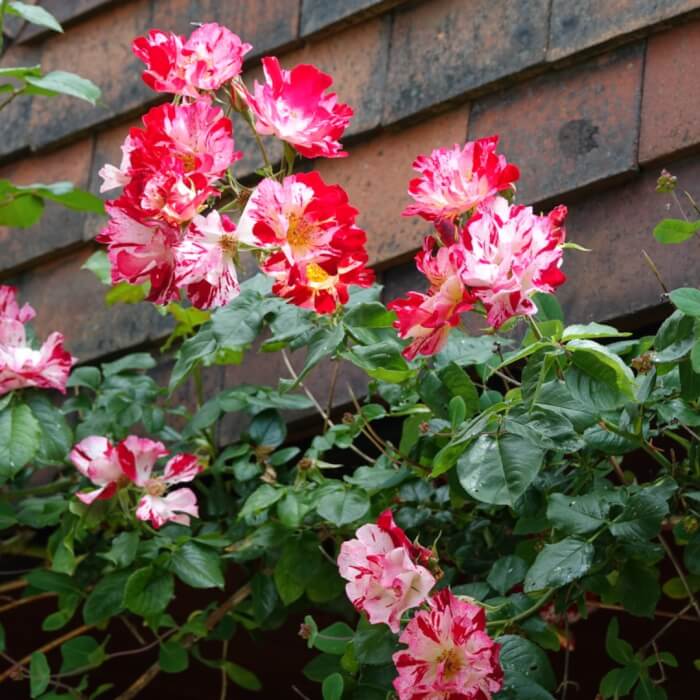
‘Fourth of July’ holds a special place in my collection as the climbing rose I most frequently recommend to gardeners seeking immediate visual impact without the extended establishment period that many climbers require. This All-America Rose Selections winner reaches impressive dimensions—12 to 14 feet in height with a spread of 3 to 6 feet—creating substantial vertical presence within just two to three growing seasons. What distinguishes this variety, and what initially captured my attention when I first encountered it, is the striking bicolor bloom: large, semi-double flowers striped vividly with red and white, creating an effect reminiscent of fireworks or carnival ribbons. The color pattern is not merely decorative but carries symbolic resonance that makes this rose particularly appropriate for patriotic plantings or celebratory garden themes. In my experience, the bloom production is remarkably profuse, with clusters appearing repeatedly throughout the growing season rather than the single spectacular flush followed by sporadic rebloom that characterizes many old roses. Cultural requirements are straightforward but non-negotiable: full sun exposure (minimum six hours daily), well-drained soil with loamy texture and slight acidity (pH 6.0-6.5 optimal), and consistent moisture without waterlogging. The plant demonstrates good disease resistance in humid climates where many striped varieties succumb to blackspot, though I maintain preventive spray schedules as insurance. For gardeners seeking a climber that delivers carnival colors and reliable performance, ‘Fourth of July’ justifies its popularity through consistent, exuberant production.
#2 Peace (Rosa ‘Peace’)
Source: Rhsplants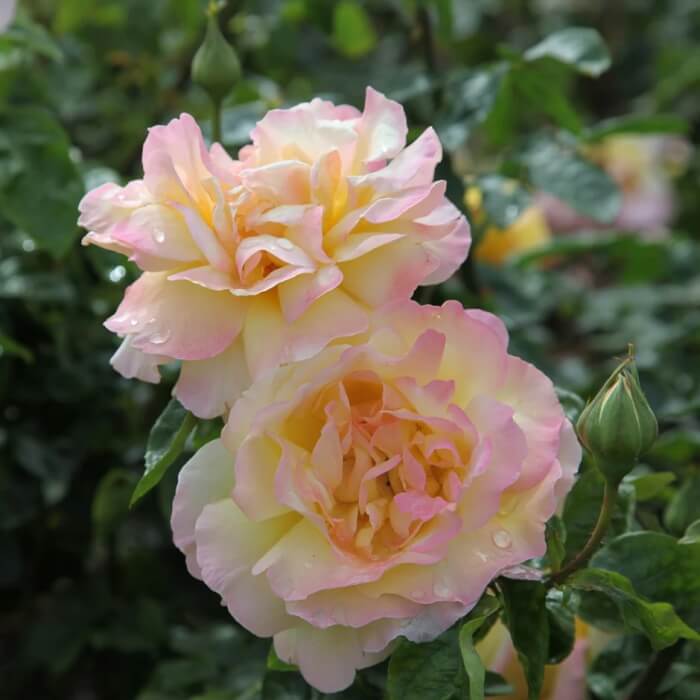
The climbing form of ‘Peace’ carries perhaps the most storied provenance of any rose in cultivation, its original bush form introduced to the world in 1945 at the United Nations founding ceremony in San Francisco, symbolizing hope in the aftermath of global conflict. When I grow this rose, I’m conscious of participating in this historical continuity, cultivating a living artifact that connects my garden to mid-century optimism and the enduring human desire for reconciliation. The climbing sport maintains the essential characteristics that made the original famous while adapting them to vertical expression: the same enormous, fully double blooms reaching 6 inches across, the distinctive coloration of creamy yellow suffused with soft pink at the petal edges, and most importantly, the complex fruity fragrance that has made ‘Peace’ the standard against which other scented roses are measured. The growth habit is notably vigorous and expansive—I’ve measured canes exceeding 20 feet in favorable conditions—requiring substantial space and sturdy support structures. This is not a rose for modest fences or confined quarters; it demands large walls, substantial pergolas, or extensive trellis systems that can accommodate its ambitious reach. Suitable for zones 6b through 9b, it demonstrates adaptability to various planting situations including containers (though size eventually constrains this option), hedges where it can be trained horizontally for mass effect, and traditional border plantings. The flowering, while not technically continuous, produces such generous flushes with such brief intervening rest periods that the garden appears perpetually in bloom from late spring through autumn. For the gardener with space to accommodate its exuberance, ‘Peace’ offers an experience that transcends mere horticulture, touching something essential in our collective cultural memory.
In practical cultivation, I’ve found that ‘Peace’ climbing responds enthusiastically to the classic rose care regimen: generous feeding with balanced fertilizers, consistent moisture management, and winter pruning to remove spent wood and shape the framework for coming seasons. The fragrance, which intensifies in warm, humid conditions, makes this an ideal choice for planting near seating areas or windows where the scent can drift indoors. One observation from my own garden: the color intensity varies significantly with temperature, the pink tones deepening in cool conditions and becoming more subtle in summer heat, creating a dynamic display that changes throughout the season.
#3 Dublin Bay (Rosa ‘Dublin Bay’)
Source: Whiteflowerfarm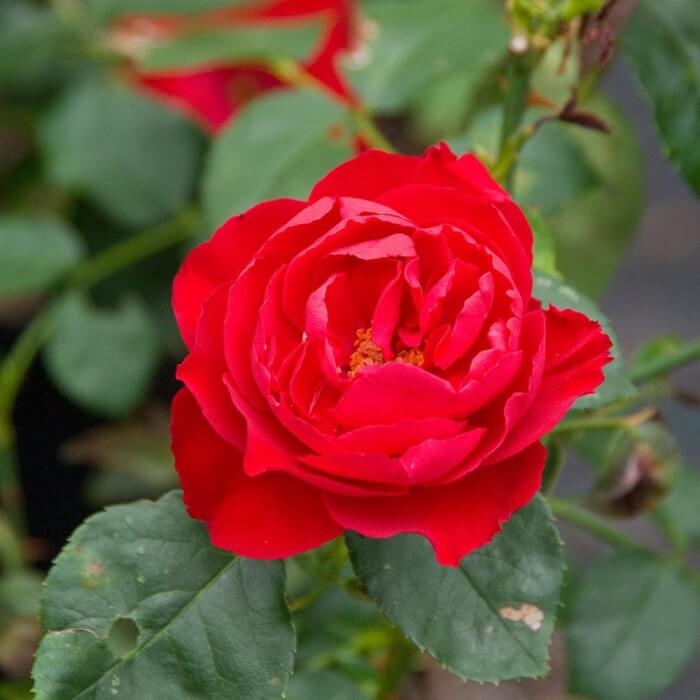
Among the red climbing roses I’ve cultivated over the years, ‘Dublin Bay’ stands out for its exceptional color saturation and the extended blooming period that defies the reputation of many red roses for single spectacular flushes followed by prolonged dormancy. The flowers emerge from pointed buds as rich, velvety crimson that seems to absorb light, creating depth of color that photographs struggle to capture accurately. In my garden, this variety has established itself as the most reliable continuous bloomer among my climbing reds, producing flowers from late spring through first frost with only brief pauses between flushes. The growth dimensions—8 to 12 feet in height with 5-foot spread—make it suitable for moderate-scale structures while still providing substantial vertical presence. I’ve been particularly impressed by the foliage quality: dark, glossy green leaves that remain healthy and attractive even when not in flower, providing year-round structural value that many climbers, with their disease-prone or sparse foliage, cannot match. The fragrance, while present, is subtle and fruity rather than the intense perfume of some varieties; this may disappoint those prioritizing scent, but I find it acceptable given the visual compensation. Cultural requirements emphasize sun exposure—minimum six hours daily for optimal blooming, though I’ve observed acceptable performance with slight reduction in hot climates where afternoon shade prevents color bleaching. The extended blooming season demands consistent nutritional support; I apply organic rose fertilizer monthly during the growing season, supplemented with foliar feeds during peak production periods. For gardeners seeking the classic red climbing rose experience with modern reliability and extended season, ‘Dublin Bay’ represents an excellent compromise between traditional aesthetics and contemporary performance standards.
#4 Westerland (Rosa ‘Westerland’)
Source: Gardenersworld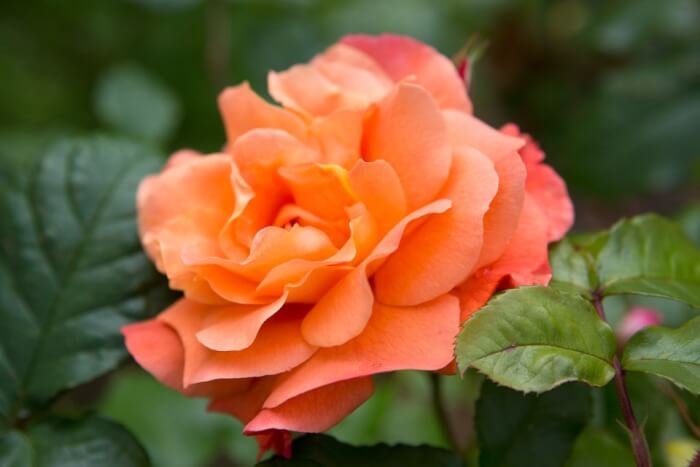
‘Westerland’ occupies a distinctive position in my climbing rose collection as the variety I most frequently recommend for northern gardeners or those in climates with challenging winter conditions. Its exceptional hardiness—surviving and thriving well into zone 5 with minimal protection—expands the possibilities for climbing rose cultivation into regions where many tender varieties fail. But hardiness alone would not justify inclusion in this selection; ‘Westerland’ earns its place through the unique coloration and extraordinary fragrance that make it a sensory highlight of my late summer garden. The flowers progress through a fascinating color sequence, opening as copper-orange and gradually softening to apricot and finally buff-cream, creating a multi-hued effect when blooms of different ages coexist on the same plant. The fragrance is among the most powerful I’ve encountered in modern roses, carrying distinct notes of citrus and spice that can perfume an entire garden sector on warm, humid days. The growth habit is substantial—5 to 12 feet in height with 4-foot spread—requiring space and support appropriate to its vigor. I’ve found that winter management requires specific attention: light pruning in late fall or early winter reduces wind resistance and prevents cane damage from winter storms, though heavy pruning should be deferred until spring when the full extent of winter damage becomes apparent. The semi-double to double flower form, with abundant petals arranged in loose, informal whorls, creates a romantic, old-fashioned appearance that contrasts pleasingly with more formal modern varieties. For the gardener in marginal climates seeking climbing rose beauty without the anxiety of winter survival, ‘Westerland’ offers a rare combination of resilience and aesthetic distinction.
One practical note from my experience: the color intensity varies significantly with temperature and light exposure. In cool, bright conditions, the copper-orange tones dominate and appear almost metallic; in heat and shade, the coloring softens toward apricot. I position my ‘Westerland’ where morning sun strikes the blooms directly, maximizing color development while allowing afternoon shade to extend flower longevity.
#5 Altissimo (Rosa ‘Altissimo’)
Source: Fineartamerica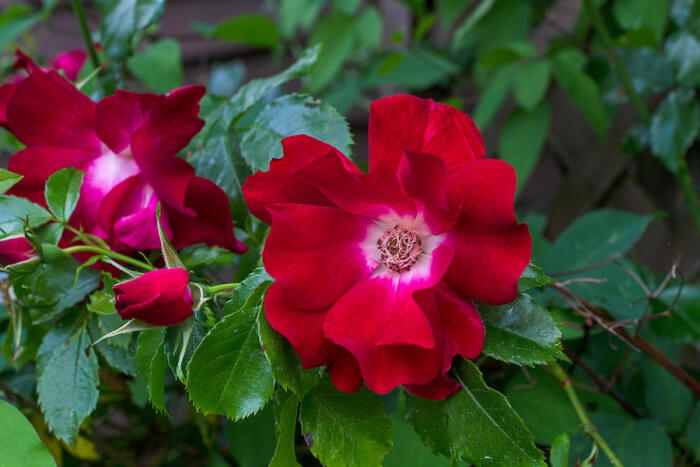
‘Altissimo’ represents the climbing rose at its most architecturally dramatic, a variety that I’ve come to associate with bold, contemporary garden design rather than the romantic, cottage-garden aesthetic that many climbers suggest. The growth potential is substantial—7 to 20 feet in height with spreads of 5 to 8 feet—creating vertical elements of genuine architectural scale. What distinguishes the flowering is the single-petal form: each bloom consists of four to seven broad, velvety petals of intense, saturated red surrounding prominent central clusters of golden stamens. This simplicity of form creates visual impact quite different from fully double varieties, emphasizing color purity and the contrast between petal and reproductive structures. In my garden, I use ‘Altissimo’ specifically for modernist compositions where its clean lines and bold coloration complement geometric hardscaping and structural planting. The glossy foliage contributes to this contemporary aesthetic, providing reflective surfaces that catch light and movement. I’ve discovered that this variety offers remarkable versatility in training: while naturally inclined to climb, it responds well to shaping into tall shrub form through strategic pruning and support, making it suitable for gardeners who desire flexibility in their plantings. The maintenance regimen I’ve developed emphasizes twice-yearly feeding—spring application to support initial flowering, summer application to sustain the repeat bloom—and single annual pruning in winter to remove spent wood and shape the framework. The flowering is notably generous and repeat, with individual blooms lasting several days due to the single-petal construction that resists the balling and browning that afflict more heavily petaled varieties in wet weather. For the gardener seeking climbing rose impact with modern sensibility and reduced maintenance demands, ‘Altissimo’ offers a compelling alternative to more traditional selections.
#6 Souvenir de la Malmaison (Rosa ‘Souvenir de la Malmaison’)
Source: Flickr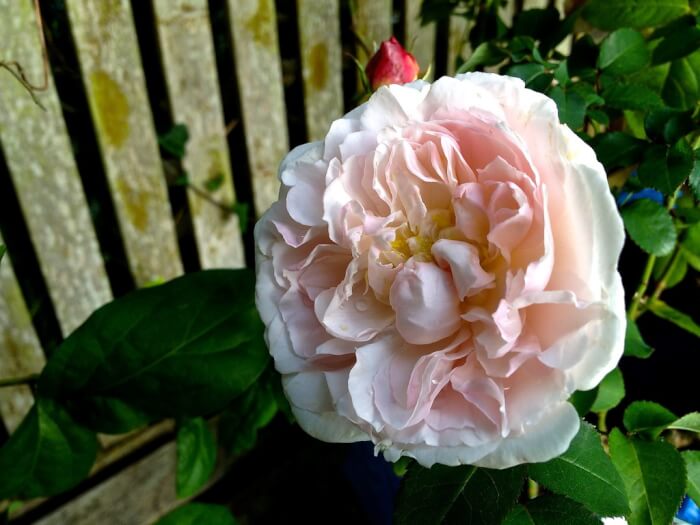
The climbing form of ‘Souvenir de la Malmaison’ carries me into the realm of historical roses with genuine emotional resonance—this is a cultivar with provenance, with stories, with connections to nineteenth-century gardens and the Empress Joséphine who made Malmaison famous. When I grow this rose, I’m participating in a continuous tradition of cultivation that spans nearly two centuries, tending a plant that has witnessed historical transformations beyond calculation. The original bush rose, introduced in 1843, was named to commemorate the estate where Joséphine assembled her legendary collection; the climbing sport that I grow maintains the essential characteristics while adapting them to vertical expression. The growth is genuinely vigorous, with canes I’ve measured exceeding 20 feet in favorable conditions and spreads reaching 8 feet, creating massive presence that requires substantial support structures and generous space allocation. The flowers are the primary attraction: pale pink, fully double, with the “quartered” arrangement characteristic of old roses where petals fold inward to create a swirling center of extraordinary complexity. The fragrance is strong and distinctive, carrying the damask rose scent that modern breeding has largely sacrificed for other qualities. In my experience, this variety demands more attentive culture than modern climbers: it is susceptible to blackspot in humid conditions, requires careful pruning to maintain air circulation, and produces its most generous flowering in a single spectacular spring flush with only modest repeat. But the spring display is of such magnificence—hundreds of blooms simultaneously opening, filling the air with perfume, creating a vision of floral abundance that seems to belong to a more romantic era—that I accept these demands as reasonable exchange. For the gardener with space, patience, and appreciation for historical continuity, ‘Souvenir de la Malmaison’ offers an experience no modern variety can replicate.
#7 Iceberg (Rosa ‘Iceberg’)
Source: Armstronggarden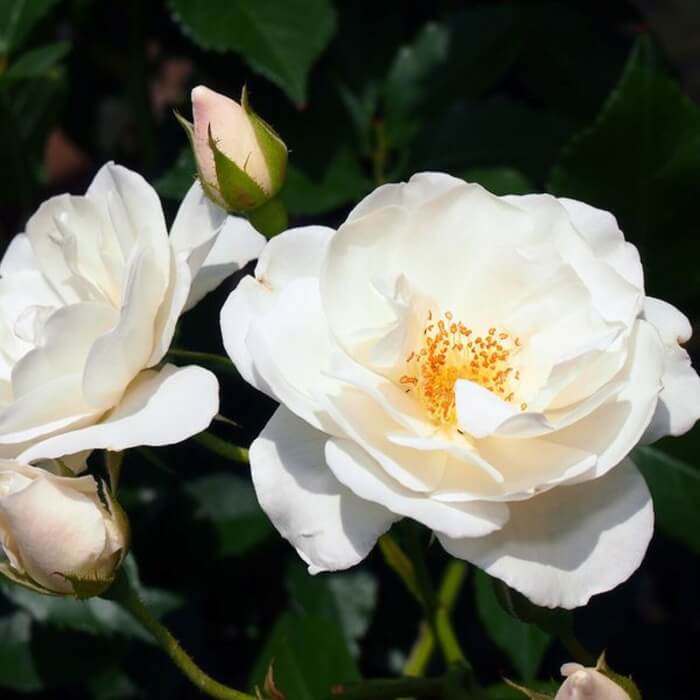
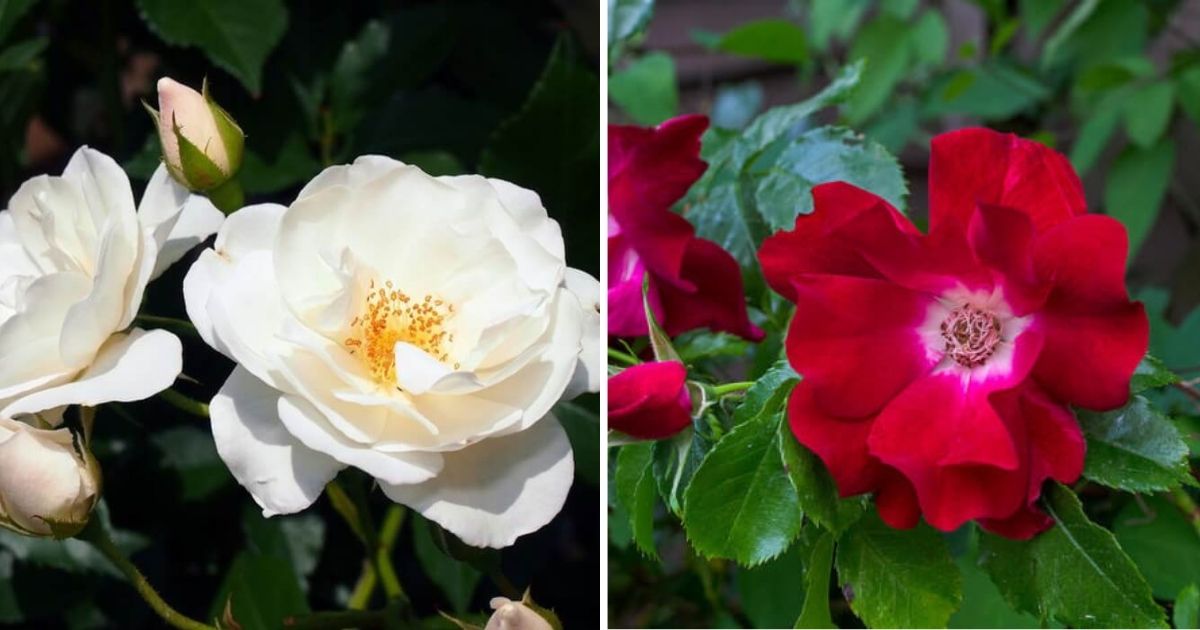
‘Iceberg’ climbing presents a fascinating case study in the compromises and compensations of rose breeding, a variety that sacrifices one primary attribute—fragrance—to achieve exceptional performance in nearly every other measurable category. The original floribunda ‘Iceberg’, introduced in 1958, became one of the most widely planted roses in history through its unprecedented disease resistance, continuous blooming, and pure white flower production; the climbing sport maintains these characteristics while adding vertical dimension. In my garden, this is the climbing rose I recommend when gardeners describe previous rose failures due to disease pressure, when they need reliable performance for difficult exposures, or when they require white flowers for specific color schemes. The growth reaches approximately 15 feet with appropriate support, producing canes of moderate thickness that are easily trained and manipulated. The flowering is genuinely continuous, with brief pauses between flushes so short that the plant appears perpetually in bloom from late spring through frost. The individual flowers are large, fully double, with the crisp white that provides perfect contrast to deeper-colored companions and exceptional visibility in evening gardens. The absence of fragrance, which I acknowledge as a significant limitation for a rose, is partially compensated by the flower form’s exceptional longevity both on the plant and in cutting—’Iceberg’ blooms persist for weeks in arrangements where more fragrant varieties would fade within days. Disease resistance is outstanding; in my experience, this variety shows remarkable tolerance to blackspot, powdery mildew, and rust even in seasons when these afflictions devastate neighboring plantings. For the practical gardener prioritizing performance over perfume, or for situations where fragrance is less critical than visual impact and reliability, ‘Iceberg’ climbing offers one of the most favorable risk-reward ratios in the climbing rose category.
#8 American Beauty (Rosa ‘American Beauty’)
Source: garden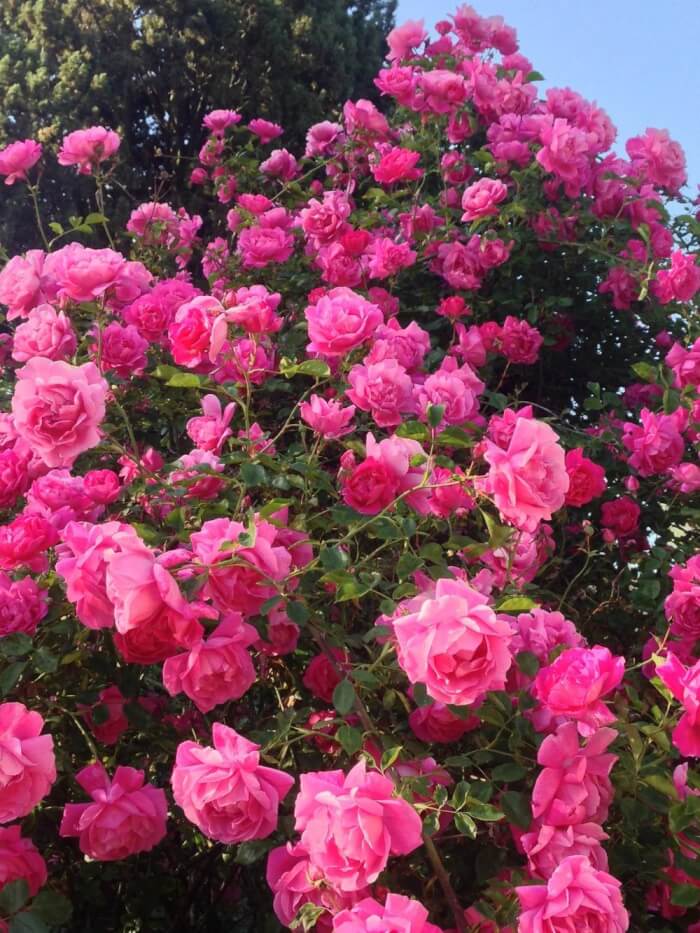
‘American Beauty’ carries cultural associations that precede any horticultural consideration—the name evokes the 1999 film, the Grateful Dead album, and broader concepts of national aspiration and aesthetic ideal. The rose itself, however, predates these references, having been introduced in 1875 and achieving immediate popularity that made it the best-selling rose in the United States for decades. When I cultivate this variety, I’m aware of these layered meanings, growing a plant that functions simultaneously as living organism and cultural symbol. The climbing form reaches 12 to 15 feet with long, flexible canes that are exceptionally amenable to training against walls or through trelliswork. The flowers are the deep, cupped pink that defined the “rose-colored” ideal of the Victorian era, fully double with a classic hybrid tea form that opens gradually from pointed buds to reveal swirling interior petals. I’ve found this variety notably shade-tolerant compared to most climbing roses; while it performs best in full sun, it accepts partial shade with reasonable grace, making it valuable for difficult exposures where other climbers would fail. The fragrance is moderate but pleasant, the classic “rose” scent that non-gardeners identify with the flower. In my experience, ‘American Beauty’ benefits from the traditional rose care approach: generous organic feeding, consistent moisture, and annual winter pruning to remove spent wood and encourage new flowering canes. The historical significance of this variety makes it particularly appropriate for heritage gardens, period restorations, or any planting where narrative and provenance enhance horticultural value. For the gardener seeking connection to rose-growing traditions and American horticultural history, ‘American Beauty’ offers living continuity with the past while maintaining practical garden value in the present.
#9 Royal Sunset (Rosa ‘Royal Sunset’)
Source: Visitdenmanisland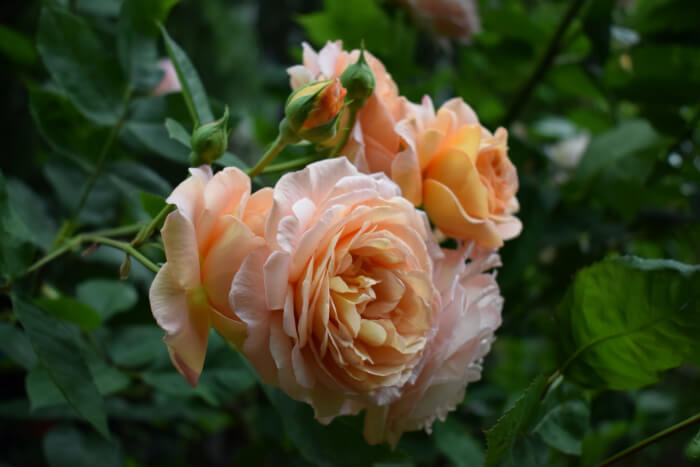
‘Royal Sunset’ entered my collection relatively recently but has rapidly established itself as a favorite for specific applications where its distinctive characteristics shine. This is a rose of moderate scale—reaching approximately 10 feet in height—making it suitable for smaller structures or confined spaces where larger climbers would overwhelm their supports. The foliage is immediately distinctive: dark, bronzy-green with pronounced gloss, creating a sophisticated backdrop that I find particularly effective in contemporary garden designs where foliage color variation contributes to overall composition. The flowering follows a pattern common to many modern climbers: initial establishment with limited bloom, followed by dramatically increasing production as the plant matures, with true abundance typically achieved only after the second or third growing season. The flowers are large and shapely, colored in warm apricot tones that shift with light conditions from soft peach to deeper orange, always maintaining a warmth that complements rather than competes with neighboring plantings. The fragrance is notably strong and fruity, carrying distinct notes that I’ve heard variously described as citrus, peach, or apple—complex and appealing without the heaviness of some old rose perfumes. I’ve found ‘Royal Sunset’ particularly valuable for cutting; the long stems, held singly or in small arrangements, provide interior decoration of exceptional quality with vase life exceeding a week when properly conditioned. The cultural requirements are standard for climbing roses—full sun preferred, well-drained soil, consistent feeding—but the plant demonstrates good tolerance of less-than-ideal conditions once established. For the patient gardener willing to wait for maturity, ‘Royal Sunset’ offers increasingly generous returns that justify the initial investment of anticipation.
#10 Cécile Brunner (Rosa ‘Cécile Brunner’)
Source: Rhsplants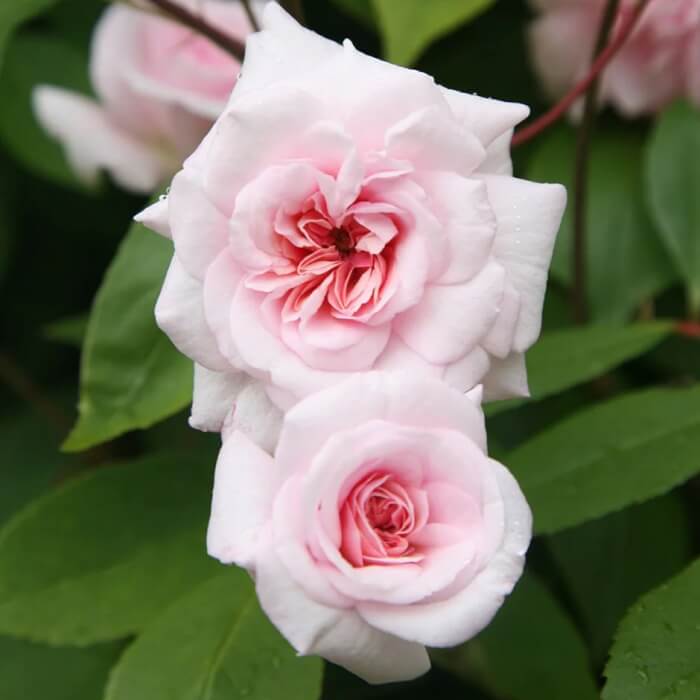
‘Cécile Brunner’ climbing concludes my selection with a variety that I consider the quintessential rose for romantic, cottage-garden aesthetics—the plant I most frequently recommend when gardeners describe visions of roses scrambling over arbors, cascading from pergolas, or clothing weathered fences in abundant bloom. Introduced in 1881, this polyantha climber has maintained popularity across nearly a century and a half through a combination of charm and reliability that newer varieties rarely achieve. The growth is genuinely rampant, with canes I’ve measured exceeding 20 feet in optimal conditions and spreads of 6 feet, creating massive presence that requires generous space and sturdy support but rewards the investment with spectacular flowering. The individual blooms are small—barely an inch across—but produced in such profusion that the overall effect is of floral abundance unmatched by larger-flowered varieties. The color is the softest blush pink, deepening slightly at the center, with a form that progresses from exquisite pointed buds to semi-double open flowers of perfect proportion. The fragrance is distinctive and delightful, carrying sweet, spicy notes with a tea-like quality that distinguishes it from the heavier perfumes of many old roses. In my experience, ‘Cécile Brunner’ demonstrates exceptional shade tolerance, performing admirably on north-facing aspects or in dappled light where direct sun is limited to a few hours daily—this adaptability significantly expands its application in challenging garden situations. The flowering is continuous from late spring through frost, with individual flushes so generous that the plant appears solidly in bloom even during brief intervening rest periods. For the gardener seeking the romantic ideal of the climbing rose, willing to accommodate its vigorous growth and provide appropriate support, ‘Cécile Brunner’ offers an experience that has satisfied rose growers for generations and shows no sign of losing its appeal.
One final observation from my years with this variety: the small flowers, while individually modest, possess a perfection of form that rewards close inspection. I often find myself examining individual blooms with magnifying glass, appreciating the precision of petal arrangement and the delicate coloration that photographs fail to capture adequately. This is a rose for the patient observer, the gardener who values subtlety alongside abundance.