When frost begins to paint intricate patterns across your windows and the world outside turns muted and gray, your winter garden doesn’t have to surrender to the seasonal blues. I’ve always believed that the true test of a thoughtful landscape design lies not in its summer glory, but in how it performs during the dormant months. Enter the unsung heroes of the cold season: evergreen shrubs adorned with brilliant red berries that transform desolate winterscapes into vibrant tapestries of life.
There’s something almost magical about stepping outside on a crisp December morning and being greeted by clusters of ruby-red berries glistening with frost. In my experience, these plants do more than just please the eye—they create an atmosphere that captures the essence of the holiday spirit in a way that no artificial decoration ever could. Whether you’re aiming for a classic Christmas aesthetic or simply want to maintain visual interest when most plants have retreated underground, these shrubs deliver year-round value.
Beyond their ornamental appeal, I’ve come to deeply appreciate the ecological role these plants play. As someone who spends countless hours observing backyard wildlife, I can attest that berry-producing shrubs become absolute magnets for birds during the lean months of autumn and winter. There’s profound satisfaction in watching cedar waxwings, robins, and cardinals feast on the fruits you’ve cultivated, knowing you’ve provided essential sustenance when natural food sources are scarce. The best part? Most of these varieties are remarkably forgiving, requiring minimal intervention once established.
#1 Bearberry Cotoneaster
Source: Watsonsgreenhouse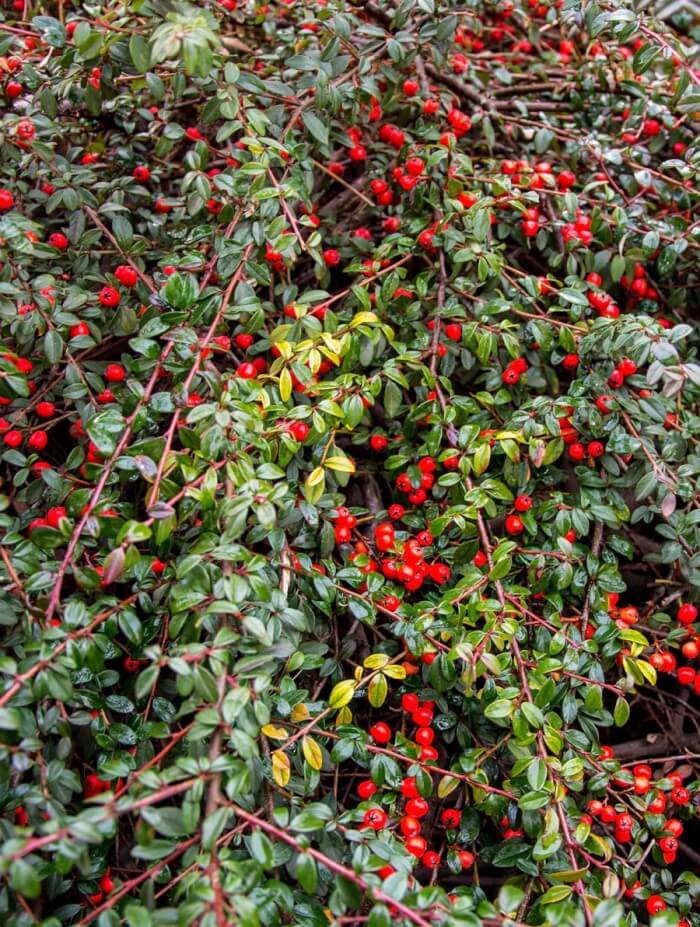
If you’re grappling with challenging terrain, particularly sloped areas where erosion is a concern, bearberry cotoneaster (Cotoneaster dammeri) should be at the top of your list. Hardy in USDA zones 5 through 8, this resilient groundcover has earned its place in my recommendations through sheer versatility. The plant presents a trifecta of seasonal interest: glossy dark green leaves that persist through winter, delicate white flowers in late spring that attract pollinators, and those signature bright red berries that persist long into the cold months. What I find particularly impressive is its adaptability—it performs admirably as a slope stabilizer, creates crisp definition when used as edging along walkways, and forms an impenetrable weed-suppressing mat when deployed as ground cover. In my own garden landscape, I’ve used it to transform a previously problematic slope into one of the most visually striking areas of my property.
#2 Korean Barberry
Source: Plants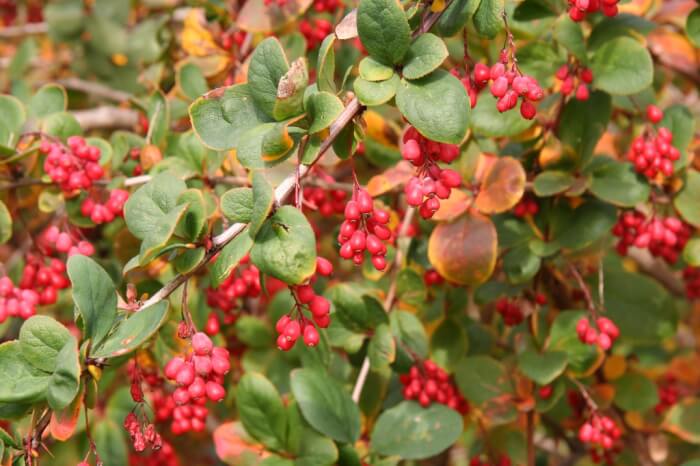
Korean barberry (Berberis koreana) is one of those plants that stops visitors in their tracks. The egg-shaped berries hang in dense clusters like miniature lanterns, creating a spectacular display from late summer well into winter. Thriving in zones 3 to 7, it demonstrates remarkable cold hardiness that makes it suitable for gardens in harsh northern climates where options can feel limited. I’ve observed that the berries not only provide visual drama but also serve as an important food source for birds who seem to prefer them after they’ve undergone a few freeze-thaw cycles, which apparently sweetens their flavor. From a design perspective, this shrub excels in multiple applications: formal borders gain structure from its consistent habit, hedges achieve density thanks to its thorny branches that interlock beautifully, and windscreens benefit from its tough, resilient nature. The thorns, while requiring thoughtful placement away from high-traffic areas, make it an excellent choice for security plantings as well.
#3 Japanese Skimmia
Source: Greenseasons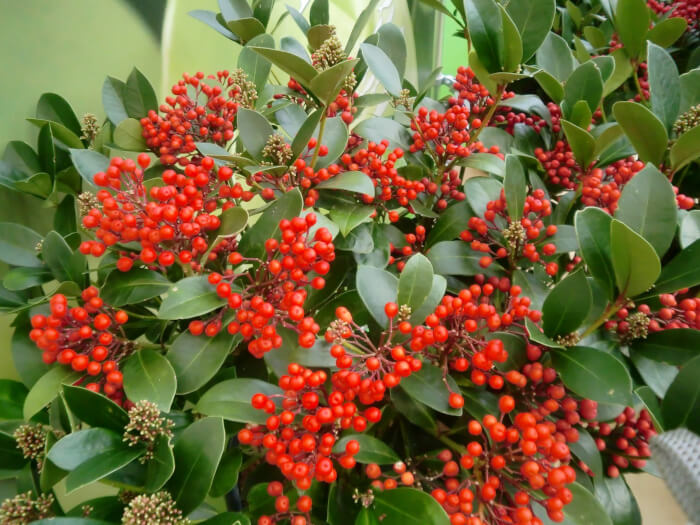
For gardeners seeking sophistication rather than bold drama, Japanese skimmia (Skimmia japonica) offers refined elegance that I’ve come to associate with classic European garden design. Best suited to zones 6 through 8, this shrub possesses an architectural quality that makes it invaluable for creating structure in shaded borders and woodland edges. The broad, oval leaves carry a subtle gloss and, when bruised, release a distinctive aromatic quality that adds another sensory dimension to your garden experience. What distinguishes skimmia in my mind is its gendered nature—you’ll need both male and female plants to achieve those coveted red berries, a consideration that requires some planning but rewards the thoughtful gardener with months of fruit display. I particularly love using it on banks and slopes where its fibrous root system helps stabilize soil, or incorporating it into foundation plantings where its evergreen presence provides year-round structure beneath deciduous trees.
#4 English Holly
Source: Birdsandblooms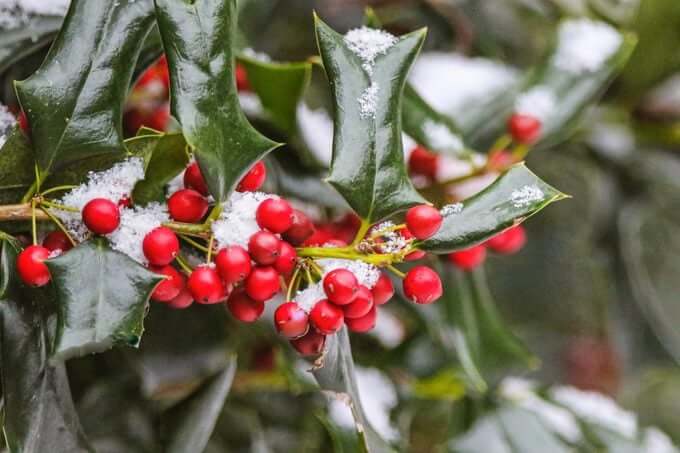
No discussion of evergreen berries would be complete without acknowledging English holly (Ilex aquifolium), the undisputed monarch of winter gardens. In my two decades of gardening, I’ve yet to encounter a plant that captures the imagination quite like this one. The dark, lustrous leaves with their unmistakable spiny margins provide the perfect foil for clusters of brilliant red berries that reach their peak just as the holiday season arrives—nature’s timing at its most poetic. Suitable for zones 6 through 10, holly adapts to various light conditions though it fruits most profusely with some sun exposure. What many novice gardeners don’t realize is that, like skimmia, hollies are dioecious, requiring a male pollinator nearby to ensure berry production on female plants. The investment in planning pays dividends: cut branches for holiday arrangements, persistent winter color, and the incomparable joy of watching birds navigate the spiny leaves to reach the nutritious fruits. In my garden, English holly serves as the anchor plant around which my entire winter landscape revolves.
#5 Spotted Laurel
Source: Gardenia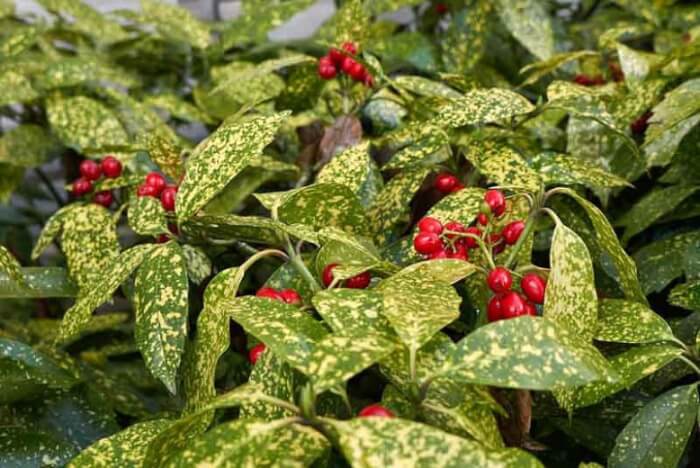
Spotted laurel (Aucuba japonica ‘Variegata’) challenges the notion that variegated plants are somehow less sophisticated than their green counterparts. I’ve found this shrub to be indispensable for brightening deeply shaded areas where few other plants dare to thrive. The cream-yellow spotting against deep green creates a luminous quality that seems to glow in dim light, while the thick, leathery leaves provide substantial texture that anchors any planting combination. Come spring, insignificant but charming flowers give way to glossy, deep red berries that persist for months, creating a striking contrast with the variegated foliage. In zones 6 through 10, it proves remarkably adaptable, tolerating dry shade, urban pollution, and neglect with equal indifference. I routinely specify it for hedges where its dense branching creates effective privacy screens, for borders where it provides crucial winter structure, and for windscreens where its toughness shines. The combination of foliage interest and berry production makes it one of the most hardworking plants in the winter garden.
#6 ‘Red Cushion’ Scarlet Firethorn
Source: Treehouse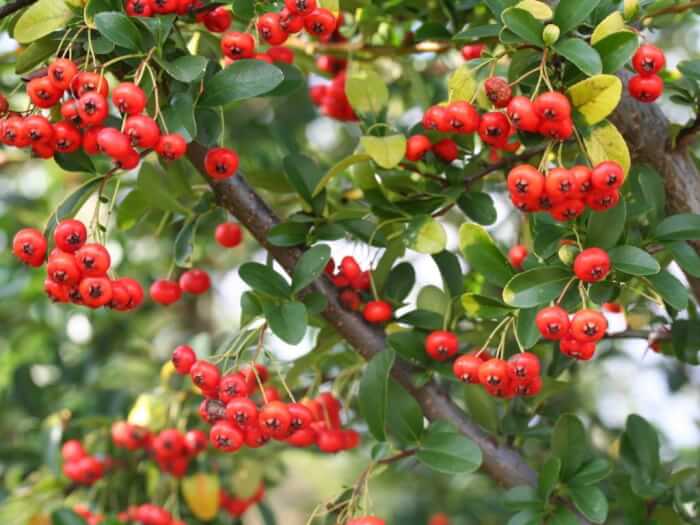
When I need serious impact, I turn to ‘Red Cushion’ Scarlet Firethorn (Pyracantha coccinea ‘Red Cushion’). This cultivar represents the best of the firethorns, offering a compact, disciplined growth habit that distinguishes it from the more rangy species types. In Chinese landscape gardening, firethorn (known as “huoji”) is celebrated for its ability to thrive in poor soil and provide winter sustenance for birds. The profusion of red berries—literally carpeting the branches in clusters so dense they obscure the foliage—creates a spectacle that I’ve seen stop traffic in my neighborhood. Tiny white flowers in late spring and early summer provide a delicate prelude to the main event, attracting bees and other pollinators before setting fruit. The spiked branches, while demanding respect during pruning, make this an exceptional choice for espalier against walls where the two-dimensional display showcases the berries to maximum effect. In zones 6 through 9, it performs admirably as a foundation plant, in mixed hedges where its thorns deter unwanted intrusion, or as a standalone specimen where its architectural form can be fully appreciated. I’ve found that birds particularly favor this variety, often stripping it of berries during migration periods.
#7 ‘Repens Aurea’ English Yew
Source: Gardenerspath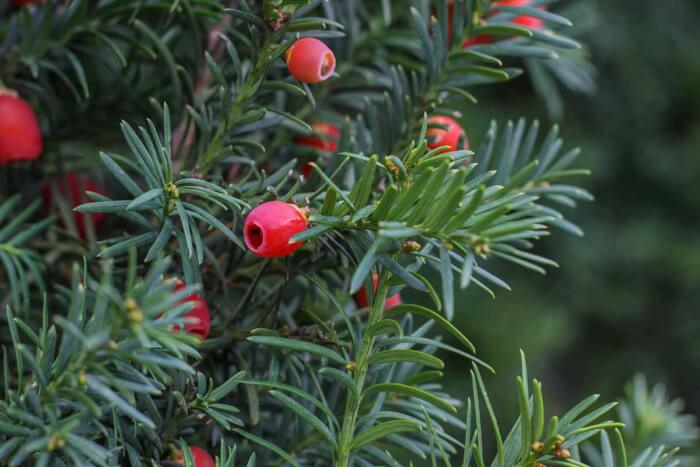
English yew (Taxus baccata ‘Repens Aurea’) occupies a special category among berry-bearing evergreens, and I include it here with the caveat that what appears to be berries are technically modified cones called arils. This taxonomic distinction matters little when viewing the plant in a winter garden, where the fleshy red structures encasing the single seed create an identical visual effect to true berries. The ‘Repens Aurea’ cultivar adds another layer of interest through its golden-edged foliage, which brightens shady corners in a way that pure green varieties cannot match. Growing in zones 6 through 8, this yew demonstrates exceptional shade tolerance, often thriving in conditions that would challenge less adaptable plants. I value it for its slow, predictable growth that requires minimal maintenance, its ability to provide structure in woodland gardens, and the historical resonance it brings—yews have been cultivated for millennia and carry a weight of garden tradition that few other plants can match. Note that all parts except the red aril are highly toxic, a consideration for gardens with curious children or pets.
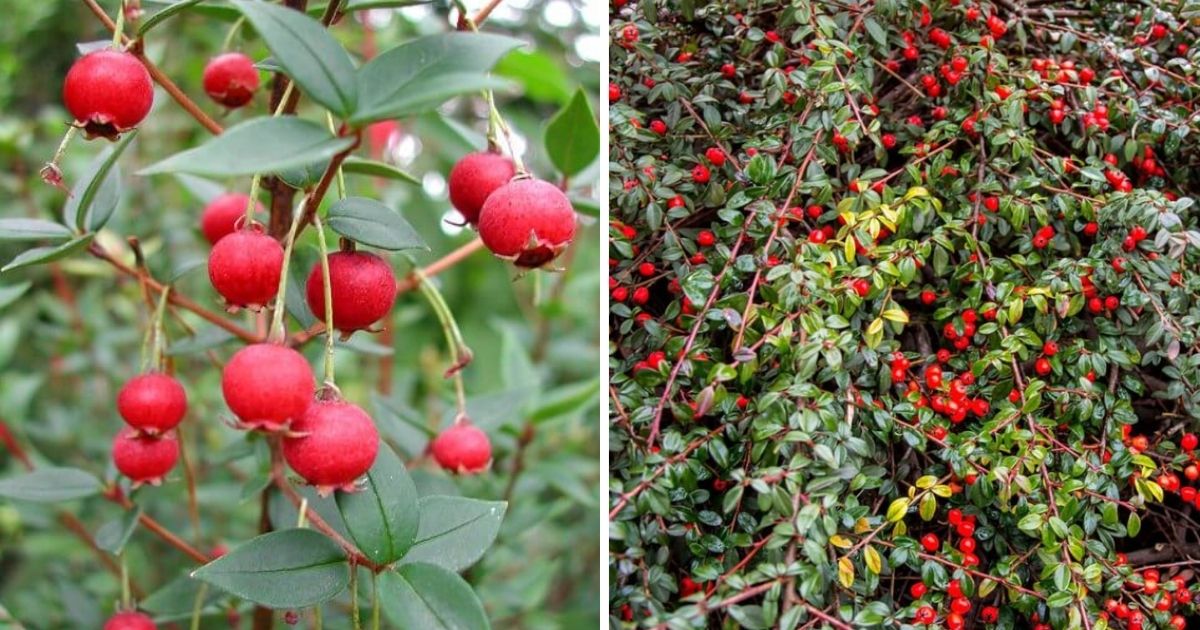
#8 Chilean Guava
Source: Strangewonderfulthings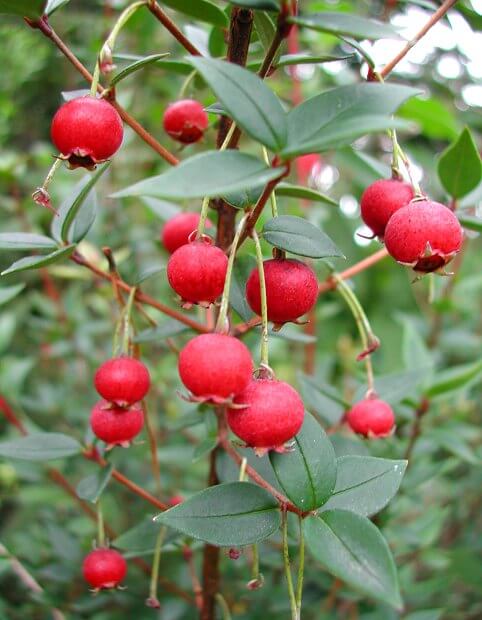
Chilean guava (Ugni molinae) represents the intersection of ornamental beauty and culinary utility, a combination that deeply appeals to my philosophy of productive landscaping. Native to Chile and Argentina, this shrub brings a touch of the exotic to temperate gardens in zones 9 through 10. The fragrant, bell-shaped flowers that dangle from branches in spring and continue sporadically through summer possess a sweet, spicy perfume that I’ve found rivals that of any ornamental jasmine. When these fade, they give way to dark red berries that are not merely bird food but genuine delicacies for human consumption—the flavor combines notes of strawberry, pineapple, and mint in a way that must be tasted to be believed. I grow mine primarily in containers where I can control soil conditions and move plants to protected locations during temperature extremes, but they perform equally well in borders and hedges where their evergreen foliage provides year-round structure. The berries are high in vitamin C and antioxidants, making this as practical as it is beautiful. For gardeners in marginal zones, site selection near walls or in microclimates can extend its range, rewarding the adventurous with one of the most unique fruiting shrubs available.